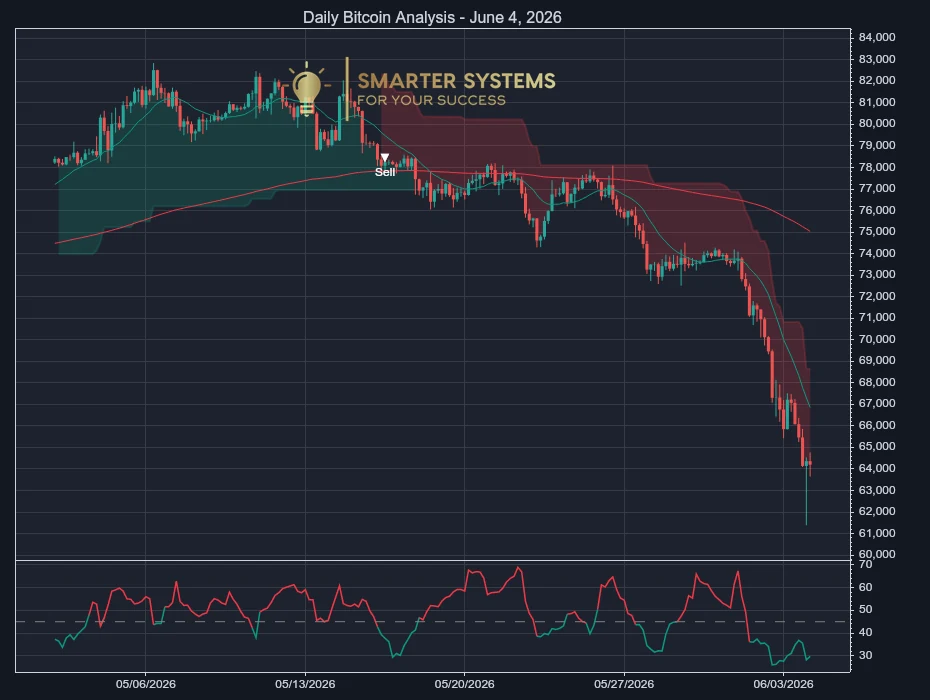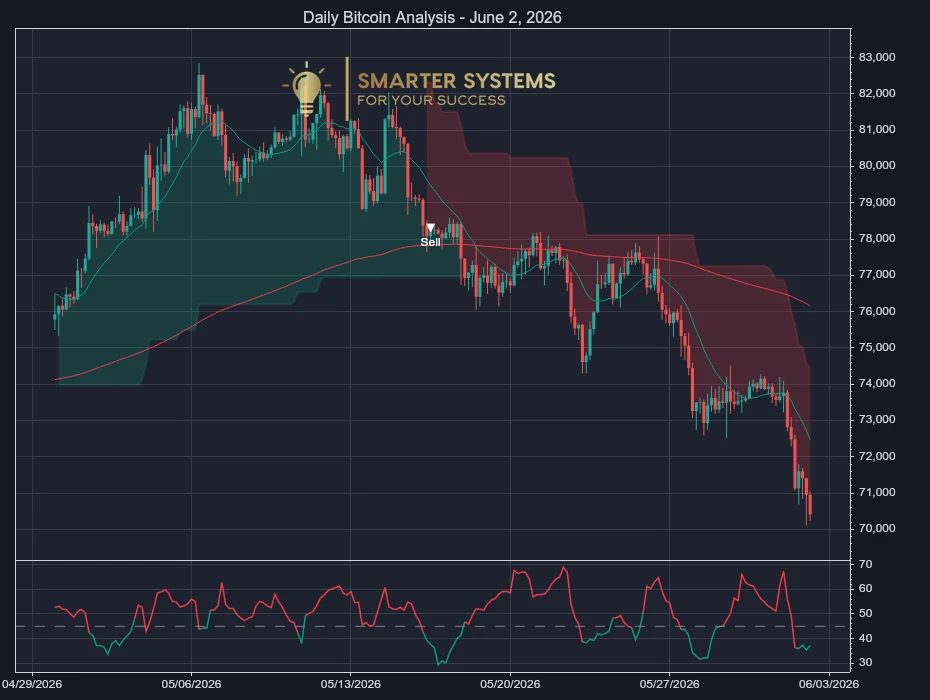
// previous briefing Bitcoin Analysis June 2, 2026: Orderly Selling Tests Support
Bitcoin Market Read for June 3, 2026
If you are long Bitcoin, one thing matters more than price this morning: the rebound is arriving after sellers already proved they can move the market with force. The useful detail is that the latest lift came on softer participation, which makes it look more like pressure being absorbed than fresh sponsorship. That does not make the move irrelevant, but it changes how investors should read it: relief inside a confirmed decline deserves respect, not immediate trust.
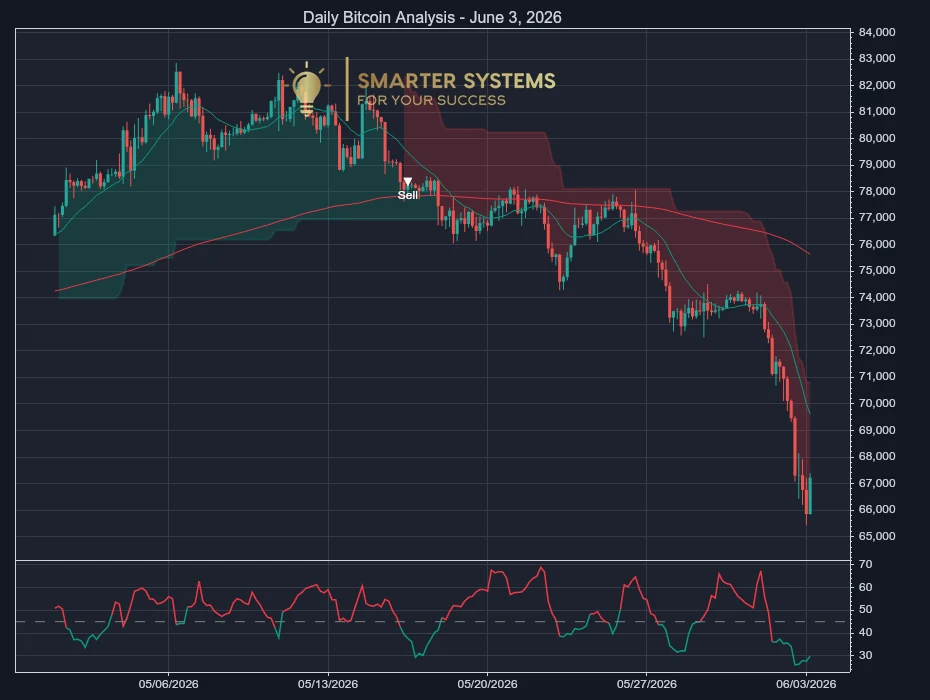
Bitcoin’s latest close at 67,223.95 leaves the market off the recent lows but not out of trouble. The latest push recovered a meaningful part of the prior decline, yet the sequence still shows sellers forcing the bigger decisions. Earlier weakness carried price through areas where buyers had previously responded, and the recovery has not yet repaired that damage. For BTCUSDT, the practical read is simple: buyers have shown they can defend a flush, but they have not yet shown they can reclaim control. Resistance is not just a line overhead, it is the zone where trapped longs, short-term sellers and cautious portfolio managers are likely to test the strength of any bounce. Support, meanwhile, is only useful if it produces slower selling and better acceptance on the next dip. The system is flat and watching, which is an honest stance here. There is information in the rebound, but not enough to treat it as a clean turn. In a healthier recovery, price would usually spend less time hesitating below prior breakdown areas. Here, the burden remains on buyers to prove that the latest advance is more than a reaction to stretched selling.
The most useful change since the previous period is not direction, but texture. Volatility narrowed after a wider selloff, and trading volume also faded as price recovered. That combination matters because it tells us the bounce was more controlled, but not necessarily more sponsored. Lower participation can be constructive when sellers stop pressing, yet it becomes questionable when price is climbing back towards supply without a visible expansion in demand. The cryptocurrency market often treats these rebounds as proof that risk appetite is returning, but the better read is more selective. The earlier leg lower showed urgency from sellers, the latest leg higher showed buyers responding, not dominating. That difference is important for allocation decisions. Investors do not need to predict the next swing to recognise that capital is still cautious. The high-low spread has calmed, which reduces immediate stress, but calm after a drop can also be a waiting room. If larger participants were aggressively rebuilding exposure, the move would likely carry a different pace and a stronger sense of acceptance near the upper part of the recovery. For now, participation argues for restraint rather than confidence.
The trend reading remains a Confirmed Down-Trend, and the price action is relatively smooth rather than messy. That matters because orderly selling is often more informative than erratic movement. It suggests pressure has been persistent enough to define market structure, not just noisy enough to unsettle it. The Not Choppy condition supports that interpretation: the market has been moving with cleaner intent, so the recent decline should not be dismissed as random fluctuation. Against that backdrop, the Sell signal is not a prediction of collapse. It is a practical warning that the setup could favour taking profits, trimming exposure, or waiting for better evidence before adding. Momentum has improved from the low, but improvement is not the same as control. A lasting shift would require buyers to absorb supply at higher prices and stop sellers from turning each rebound into another distribution point. Until that happens, the signal carries more weight than the bounce. For portfolio builders, the question is not whether Bitcoin can rally intraday, it is whether the rally changes who has the initiative. At present, that initiative still sits closer to supply.
Current System Positioning
The system is Flat, status idle, and has been out of position for 107 bars. That stance fits a market where downside pressure is organised but the latest rebound has not earned fresh exposure.
What to Watch Next
The marker to watch is the next pullback into the area buyers have just defended. A constructive read would involve slower selling, limited urgency, and trading volume that does not expand aggressively into weakness. Strength above the nearest resistance area would matter more if it arrives with firmer acceptance rather than a quick spike. The current read weakens if sellers regain pace before buyers can build a higher base.
Frequently Asked Questions
The Sell signal suggests caution rather than a call for panic. In this setup, it supports taking profits, reducing exposure, or waiting before adding BTC. The rebound has improved price, but not enough to overturn the broader downside pressure.
Lower trading volume on the rebound means buyers responded, but did not yet show strong sponsorship. After a heavier selloff, that difference matters. A quieter recovery can relieve pressure, yet it does not prove that larger capital is rebuilding exposure with conviction.
Investors should reassess when pullbacks slow down and sellers fail to regain pace near the recently defended area. A stronger case would come from acceptance near resistance, with participation improving for buyers rather than expanding only during weakness.
A Flat, idle system after a long wait reflects selectivity, not indecision. The market has a clear downside bias, but the latest rebound prevents a clean chase lower. Staying out of position allows fresh evidence to develop before committing capital.
// disclaimer This briefing is educational market commentary from a rule-based system. It is not financial advice and not a personal recommendation. Cryptocurrency is highly volatile, and past signals do not guarantee future results. Only invest money you can afford to lose. Read the full disclaimer.