// previous briefing Bitcoin Analysis June 3, 2026: Sell Signal After Rebound
Bitcoin Market Read for June 4, 2026
If you are long Bitcoin, one thing matters more than price this morning. The important shift is not the fresh low itself, but the way the attempted lift from that low failed to attract participation, leaving sellers with control even after volatility cooled. That is a more useful warning than a dramatic intraday break because it shows capital is not yet competing aggressively for BTC on weakness.
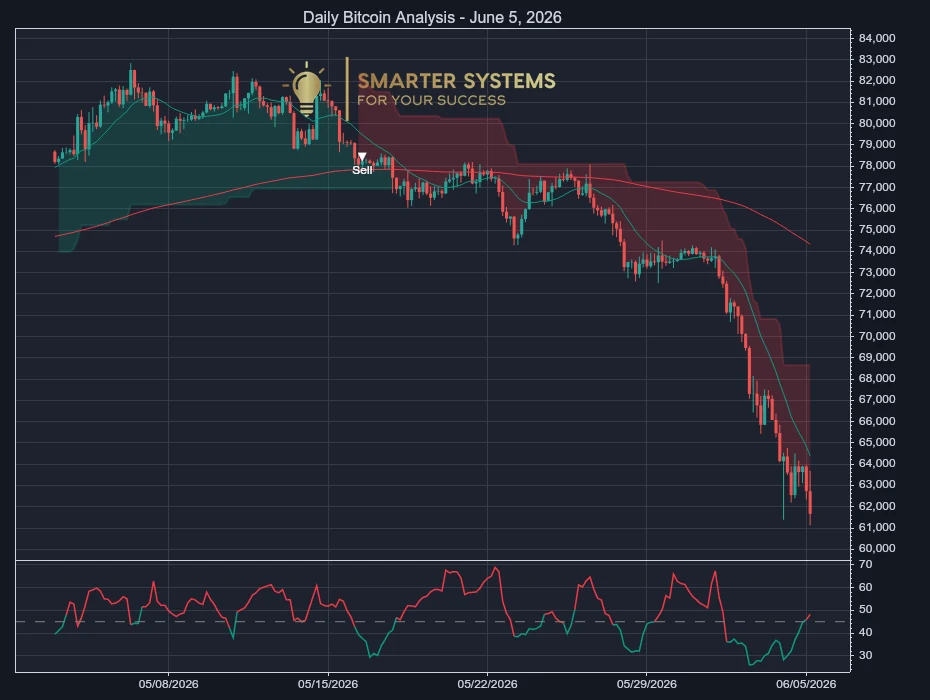
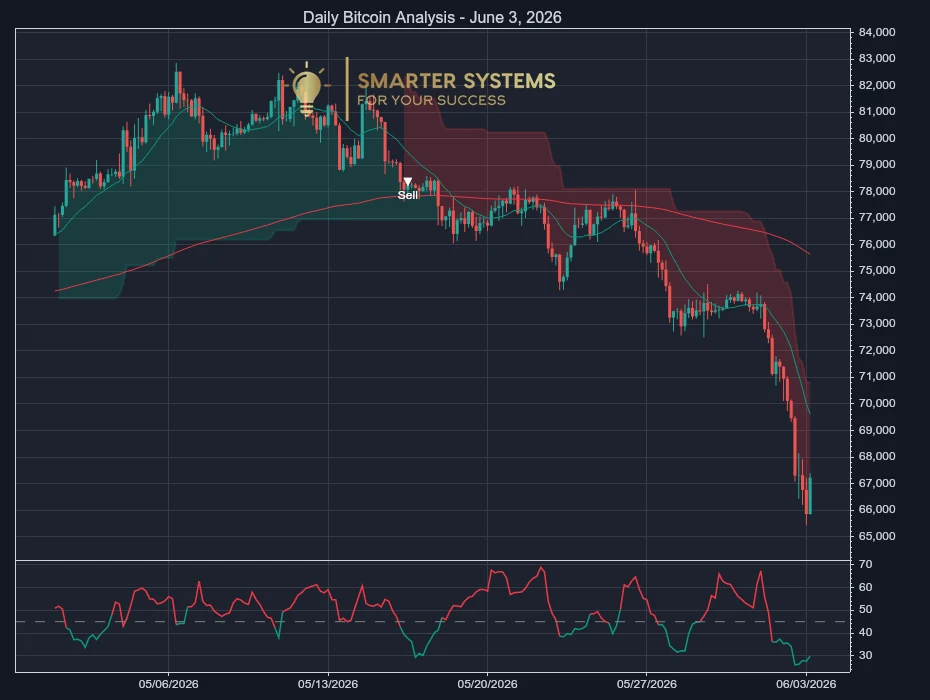
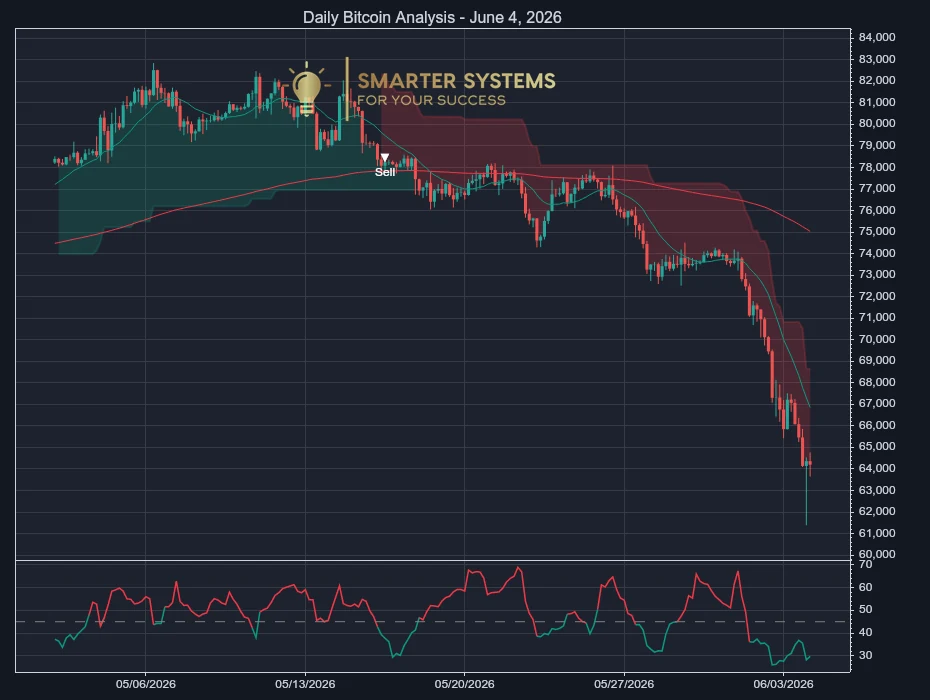
Bitcoin’s latest close at 64,200.01 leaves the market leaning lower rather than merely pausing. The sequence from the prior session shows sellers pressing each recovery before it can build pace, with the latest attempt to reclaim lost ground stalling below the earlier breakdown area. That matters because weak markets often look calm after the largest move has already happened. The absence of immediate acceleration does not mean the pressure has passed, it can mean sellers are waiting for higher prices before acting again. For portfolio investors, the point is not to react to every dip in BTC, but to ask whether downside pressure is being accepted or rejected. At present, price action is still being accepted lower. Buyers did appear after the sharpest washout, but they did not force a strong change in control. Until that changes, the burden of proof sits with demand, not supply. This is why the current read favours capital preservation over fresh exposure. A market that absorbs selling normally begins to show firmer reactions after stress; this one has so far shown hesitation, with recovery attempts arriving slowly and fading before they alter the wider market structure.
The more interesting detail is the change in volatility and participation after the selloff. The previous period carried a wide range and a heavy burst of activity, the sort of move that often reflects forced selling, urgent hedging, or both. The latest period narrowed meaningfully and trading volume fell sharply, which tells us the market did not continue lower with the same urgency. The drop in activity also matters because it came after an emotional expansion, not after a balanced advance; that makes the pause look more like digestion than accumulation. That is not bullish by itself. A quieter tape after stress can be constructive when buyers use it to reclaim ground, but BTCUSDT has not done that. Instead, price has held near the lower part of the recent structure, making support feel more provisional than defended. In the wider cryptocurrency market, that distinction matters because investors tend to overvalue the first bounce after a liquidation move. The better question is whether the bounce changes behaviour. Here, it has mainly reduced the pace of selling without creating strong upside momentum. Resistance is therefore likely to be felt sooner than usual, because trapped longs and short-term sellers have a clear area to lean against above the market on the next advance.
The signal mix is unusually clean. The trend reading is Confirmed Down-Trend, yet the action is Not Choppy, which means the decline has been relatively smooth rather than disorderly. That combination deserves respect. Disorder can create false urgency, while smooth selling often reflects patient supply meeting insufficient demand. The Sell signal should therefore be read as a setup that could favour taking profits, trimming exposure, or delaying new allocation until evidence improves. It is not a forecast that Bitcoin must collapse from here, and it is not an instruction to chase weakness. It is a statement about current advantage. Sellers have been able to move price lower with enough consistency that buyers need to prove they can absorb supply without immediately giving back progress. The system is Flat and idle, which suits this context: capital is being kept out of a market where the path of least resistance still points lower. For larger portfolios, that patience is not inactivity. It is a decision to let the market reveal whether demand is real before increasing risk into weakness or rallies. That is a useful filter for allocators.
Current System Positioning
The system is Flat, status idle, and has been out of position for 113 bars. That leaves the read observational rather than committed, with capital waiting for cleaner evidence before re-entry.
What to Watch Next
Today’s marker is the quality of any push back toward the area that broke during the selloff. A slow lift on light participation that stalls beneath that zone would keep sellers in control. The more constructive evidence would be buyers defending the latest intraday low area while participation improves during the rebound, showing demand is acting before price returns to obvious resistance.
Frequently Asked Questions
It means the current setup favours protecting gains or reducing risk rather than adding exposure. The signal appears alongside a Confirmed Down-Trend and relatively smooth selling, so the burden is on buyers to show stronger demand before allocations become attractive.
Lower participation after a wide selloff shows urgency has cooled, but it does not prove demand has returned. The rebound has not reclaimed lost structure, so the quieter tape reads more like digestion of selling pressure than decisive accumulation.
Reassessment becomes more useful when buyers defend the latest intraday low area and participation improves during a rebound toward resistance. The key is not a small uptick, but evidence that demand acts before sellers regain control.
A Flat system position means no directional exposure is currently being held. In this context, it aligns with caution: the Sell signal and downtrend argue for selectivity while the market tests whether support is being defended or merely paused above.
// disclaimer This briefing is educational market commentary from a rule-based system. It is not financial advice and not a personal recommendation. Cryptocurrency is highly volatile, and past signals do not guarantee future results. Only invest money you can afford to lose. Read the full disclaimer.