// previous briefing Bitcoin Analysis May 20, 2026: Rebound Meets Supply
Bitcoin Market Read for May 21, 2026
If you are long Bitcoin, one thing matters more than price this morning. The Sell signal is arriving after a failed lift into resistance, not after a collapse, which makes it more about exposure control than panic. Buyers did manage to push the market higher during the previous stretch, but the follow-through thinned when it mattered. That leaves BTC in a more delicate position: not yet under heavy liquidation, but no longer showing the clean demand needed to reward fresh risk.
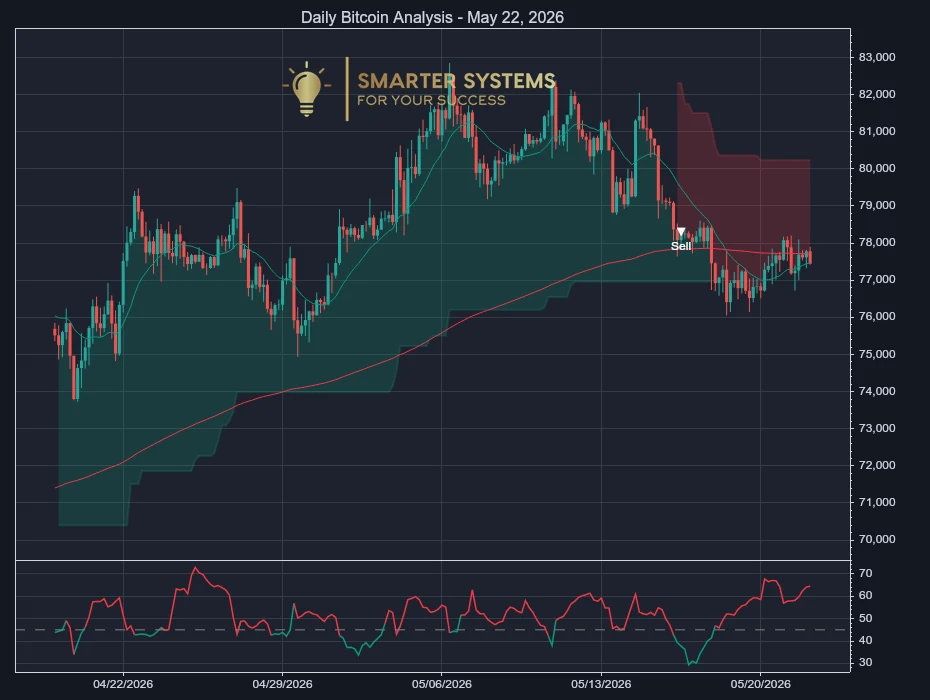
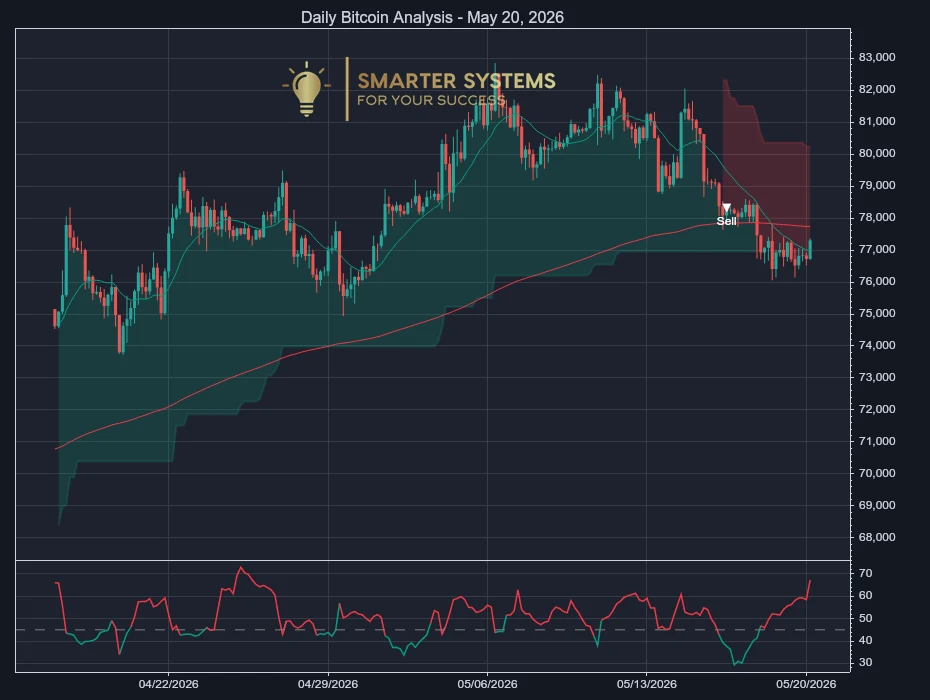
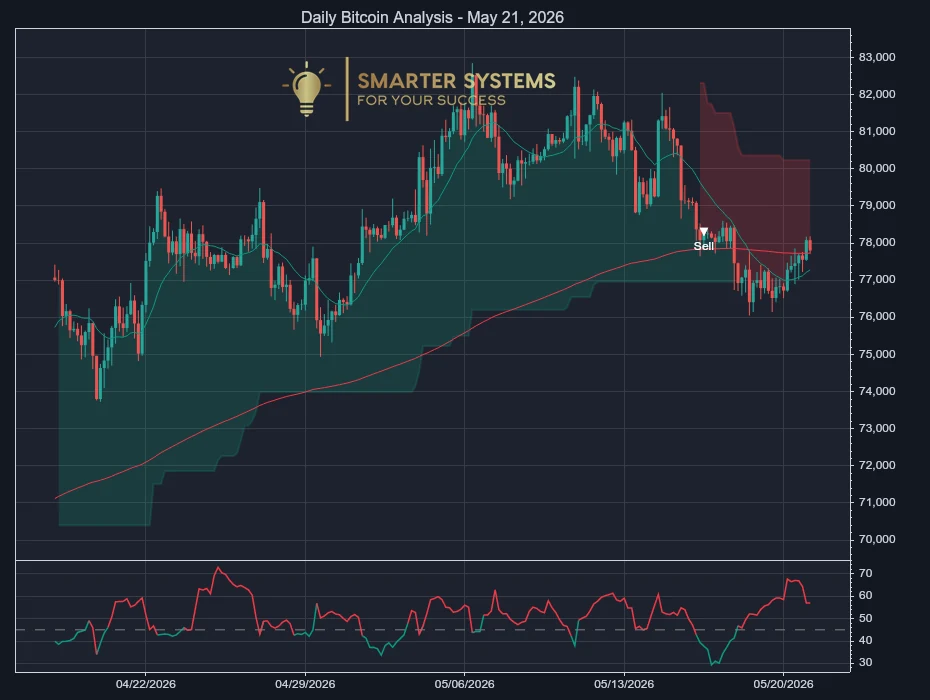
BTC last closed at 77,800 after an early push failed to keep control near the upper end of the recent intraday area. The important point is not that the decline was large; it was that buyers lost the initiative quickly after testing higher ground. In a constructive tape, a lift into resistance normally holds enough pressure to force late sellers to retreat. Here, the response was more hesitant. The market accepted the higher probe briefly, then slipped back into the body of prior trade, which tells us supply remains active above the market rather than waiting lower. That is why the current bias is defensive even though the move is not disorderly. Bitcoin has not broken down in a dramatic way, but it has also not shown the persistence needed to turn the latest rise into a durable shift. For portfolio investors, that distinction matters. A quiet loss of momentum often changes risk before it changes headlines. BTCUSDT is therefore being treated as a market to observe rather than chase, which fits the system being flat and watching after a long period out of position.
The structural context has weakened since the previous interval because volatility compressed while trading volume fell sharply. That combination is not automatically bullish. It often means the market is digesting a rejection rather than attracting fresh demand. The earlier expansion gave buyers a chance to press higher, but the next response showed less participation and less commitment. In the wider cryptocurrency market, that matters because Bitcoin usually needs broad and visible demand to reverse pressure after a failed push. The latest price action instead suggests investors are being selective, allowing bids to appear near support but not paying aggressively as the market approaches resistance. This is why the choppiness should not be dismissed as noise. It is choppy because neither side is forcing a straight move, yet the sellers are still the side acting with better timing. They are not chasing every dip; they are leaning on strength. That creates a market structure where rebounds can look encouraging for short periods, then lose energy before they attract broader participation. The quieter volume also makes each failed recovery more informative, because weak participation near the highs says more about caution than a small retreat near the lows.
The confirmed down-trend is the clearest part of the read. It does not mean Bitcoin must fall in a straight line, and it does not make every bounce irrelevant. It means the burden of proof sits with buyers. They need to show that demand can remain present after a rejection, not just during the first lift. The Choppy condition adds an important qualifier: price is moving with overlap and hesitation, so the Sell signal should be read as a portfolio management prompt rather than a reason to assume an aggressive breakdown is already under way. For investors with meaningful BTC exposure, the setup could favour taking profits on strength, trimming risk, or delaying new allocation until the market proves it can absorb supply. For investors already underweight, patience is still rational because the market has not offered clean evidence of renewed momentum. The difference between caution and bearish conviction is important here. Sellers have control of the immediate structure, but the absence of disorderly pressure means the better decision is measured risk reduction, not emotional reaction. This is especially true when participation fades into a pullback, because weak selling can still be enough to keep control when buyers are unwilling to press.
Current System Positioning
The system is Flat, status idle, and has been out of position for 29 bars, so the current read is observational rather than committed while the Sell signal develops today.
What to Watch Next
Today’s marker is the behaviour around the latest intraday low. The current Sell read stays credible while rebounds remain slow, shallow, and unable to reclaim the rejected upper area with stronger participation. I would pay particular attention to whether selling pressure grows during the next decline, because that would show investors are reducing risk into weakness rather than merely pausing after a failed push.
Frequently Asked Questions
The Sell signal favours protecting capital rather than adding risk. It appears after a failed lift into overhead supply, so the message is more about reducing exposure or taking profits than predicting an immediate collapse.
The direction is still lower, but the path is uneven. Recent price action has produced overlapping pushes rather than a clean slide, while participation faded on the latest setback. That combination keeps the market structure bearish but less decisive.
Reassessment becomes reasonable when Bitcoin can absorb dips near support without heavier selling and then return toward the rejected upper area with stronger participation. Until that behaviour appears, rebounds deserve scrutiny rather than automatic confidence.
A Flat, idle position means the system is not committed to either side despite the Sell signal. That is consistent with choppy conditions, where exposure control can be preferable to forcing a short position into uneven price action.
// disclaimer This briefing is educational market commentary from a rule-based system. It is not financial advice and not a personal recommendation. Cryptocurrency is highly volatile, and past signals do not guarantee future results. Only invest money you can afford to lose. Read the full disclaimer.