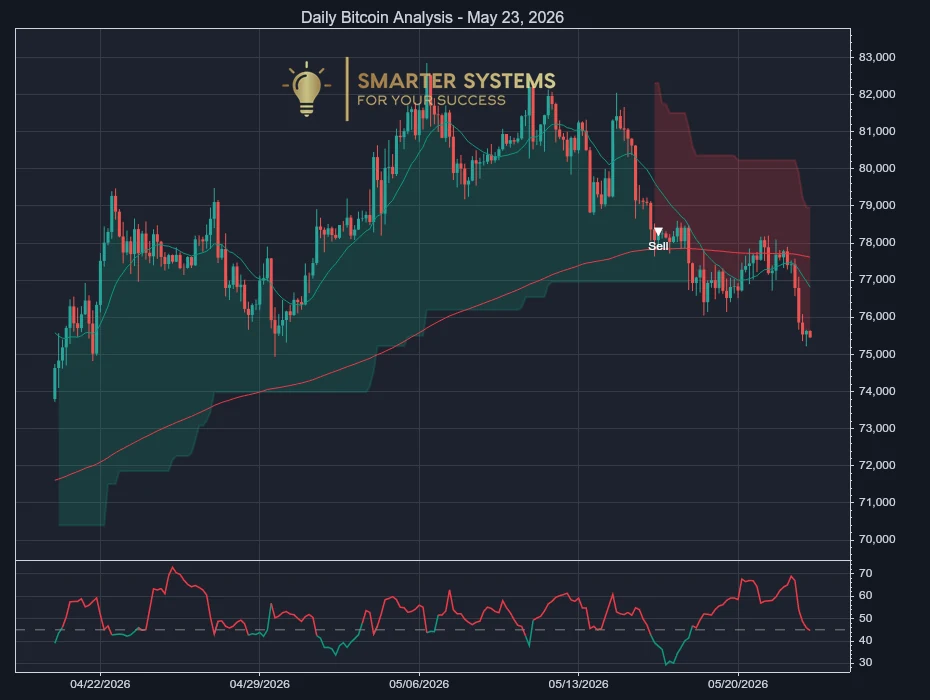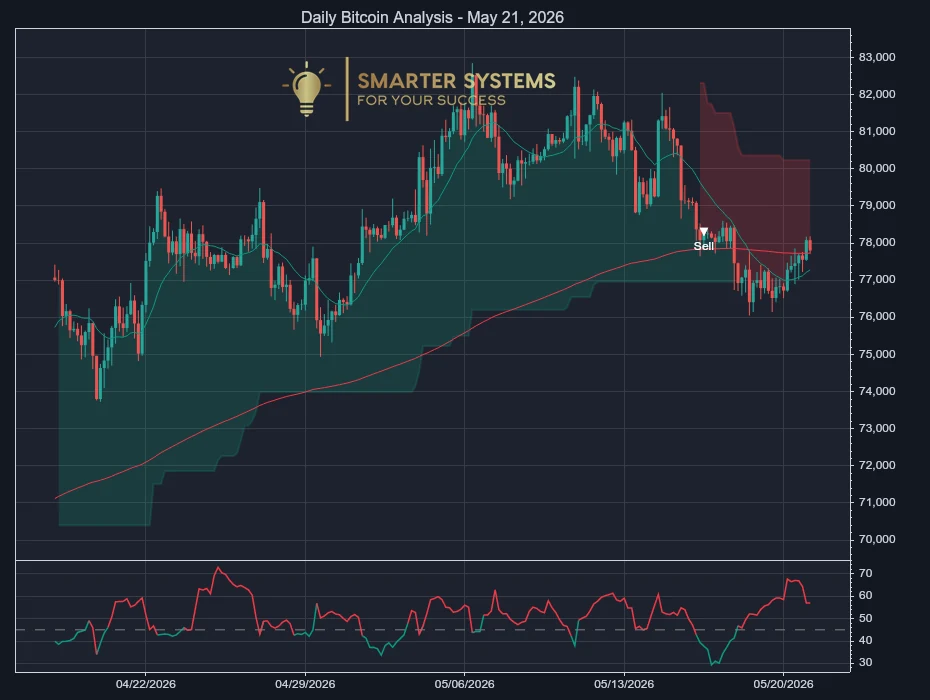
// previous briefing Bitcoin Analysis May 21, 2026: Sell Signal as Bounce Fades
Bitcoin Market Read for May 22, 2026
If you are long Bitcoin, capital preservation matters more than price this morning. The more important detail is that the latest push lower came after a failed attempt to extend higher, not after panic selling, which makes the tape look more like controlled distribution than capitulation. Sellers are not overwhelming the market, but they are turning rebounds into supply quickly enough to keep fresh risk unattractive until buyers show they can absorb pressure rather than simply slow it.
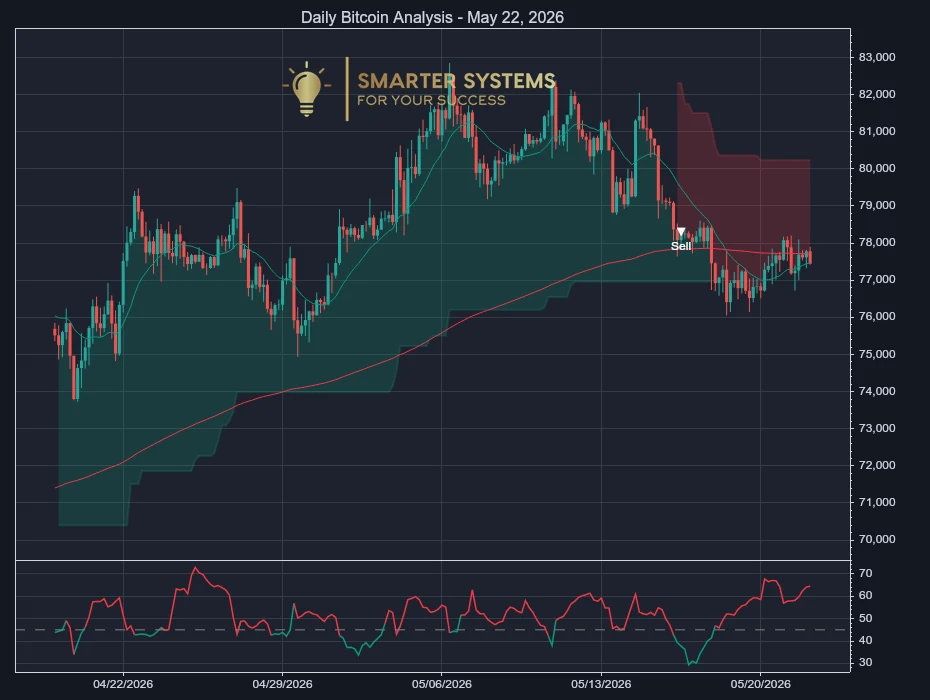
The latest BTCUSDT close at 77,444.3 leaves the market leaning lower without the kind of acceleration that would suggest a washout. The session began with a modest lift from the prior settlement area, but buyers could not keep control above the earlier recovery zone, and the retreat into the close handed the initiative back to sellers. That matters because the cryptocurrency market often treats failed rebounds differently from direct sell-offs. A direct sell-off can exhaust weak hands quickly. A failed rebound tells investors that supply is waiting higher and that buyers are still being asked to prove themselves. The current Sell signal fits that read. It does not say every holder should exit, but it does argue against adding exposure before the market shows stronger absorption. For portfolio builders, this is a place to separate long-term conviction from short-term allocation. The system is flat and watching, which is consistent with a market where the burden of proof sits with buyers rather than with anyone trying to call a low. That defensive posture is not passive; it preserves optionality when price is still being offered into strength.
The change from the previous trading window is important because it shows pressure, not panic. The trading range stayed contained while volume lifted, so the market accepted more activity without producing a clean directional break. That combination often describes disagreement rather than capitulation: sellers are active enough to cap progress, while buyers are still present near intraday support. The problem for bulls is where that activity occurred. The push toward resistance stalled before price could reclaim the higher part of the recent sequence, and the subsequent slide left BTC closer to the lower side of the day’s work. In plain terms, participation increased as the market moved away from the high, which gives the Sell signal more weight than it would have on very thin trade. Still, this is not a disorderly break. Choppy price action means investors should avoid reading too much into a single swing, especially when the range is not expanding sharply. The useful read is narrower: supply remains visible on rallies, demand has not disappeared, and the balance is not attractive enough to justify new risk. That keeps support relevant, but it also makes overhead resistance the more informative battleground.
A confirmed down-trend gives the wider market structure a clear bias, but the choppiness changes how that bias should be used. This is not the type of decline where momentum is pressing lower in a straight line and forcing urgent decisions. It is slower, more contested, and therefore more likely to punish investors who react late to every push. The practical point is that rallies deserve scepticism until they begin to hold higher levels for longer, while dips should be assessed by the quality of the response rather than by the fact that price has fallen. A Sell signal inside that context is best read as a risk-management message. It can favour trimming exposure, delaying new allocation, or letting cash stay available until the market shows buyers are prepared to compete above the latest rejection area. For investors already carrying meaningful Bitcoin exposure, the signal is not a forecast of collapse. It is a reminder that the present structure rewards patience and selectivity more than conviction. The next useful information will come from how the market behaves when it tests the lower side again.
Current System Positioning
The system is Flat, status idle, and has been out of position for 35 bars. That stance fits a choppy confirmed down-trend where fresh exposure needs clearer evidence of demand before capital is put back to work.
What to Watch Next
Watch how price behaves on the next visit to the latest intraday low area. The most constructive marker would be slower selling before that zone is reached, bids appearing without an immediate retreat, and volume expanding during the lift away from support. A fast drift back to that area with activity rising into weakness would show sellers are consuming demand rather than merely testing it.
Frequently Asked Questions
Today’s Sell signal points to risk control rather than a prediction of a collapse. The market is in a confirmed down-trend, rebounds are meeting supply, and the system is flat. Investors may treat this as a reason to trim exposure or delay new allocation.
The latest action shows sellers in control of the pace, but not a clean downside break. Volatility stayed contained while volume lifted, which suggests active disagreement rather than panic. That makes the bias cautious, but it also argues against reacting to every small swing.
Investors should reassess if the next test of the latest intraday low attracts firm demand and a lift away from support occurs on stronger participation. The key is not a single bounce, but evidence that sellers can no longer turn rebounds into supply.
The system is Flat because the current structure does not offer a clean reward for fresh exposure. A Sell signal inside a choppy confirmed down-trend favours patience. Being idle for 35 bars means it is observing rather than forcing a position.
// disclaimer This briefing is educational market commentary from a rule-based system. It is not financial advice and not a personal recommendation. Cryptocurrency is highly volatile, and past signals do not guarantee future results. Only invest money you can afford to lose. Read the full disclaimer.