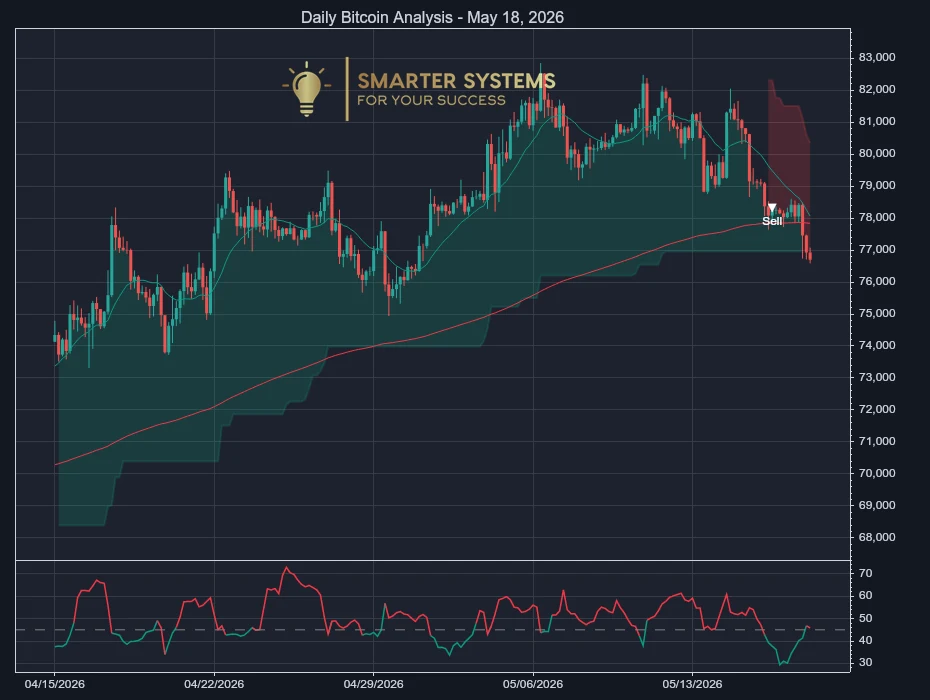
// previous briefing Bitcoin Analysis May 18, 2026: Sellers Press Lower
Bitcoin Market Read for May 19, 2026
If you are long Bitcoin, one thing matters more than price this morning: whether sellers are still being paid for pressing into each recovery. The non-obvious point is that the market is not falling through panic; it is weakening through quieter rebounds after the heaviest pressure has already appeared. That difference matters for investors because it points to controlled distribution rather than a disorderly break. BTC has not lost all support, but the latest behaviour says buyers are responding late, while sellers are shaping the pace.
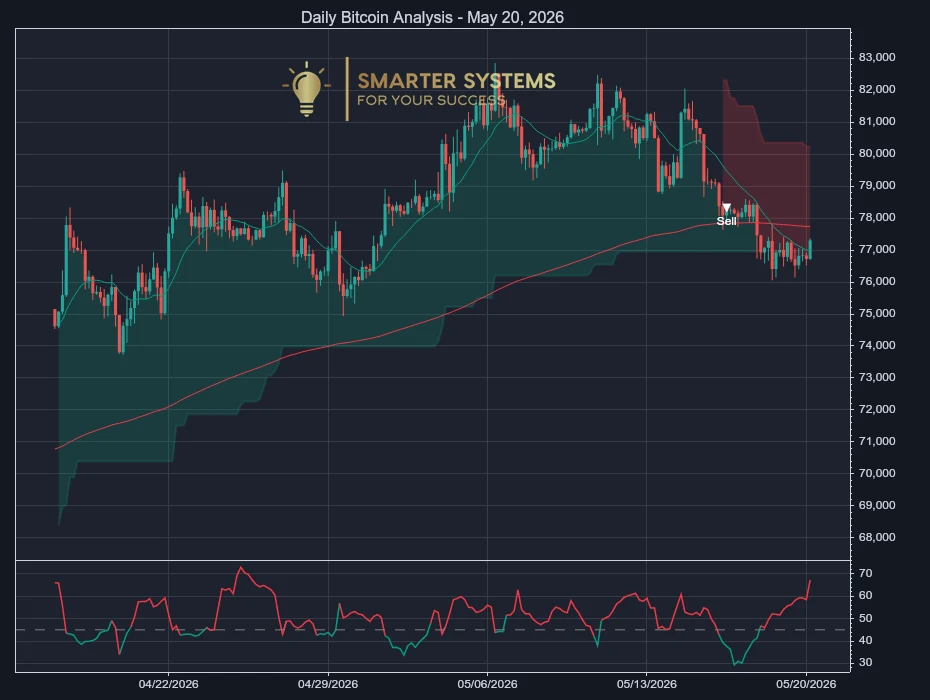
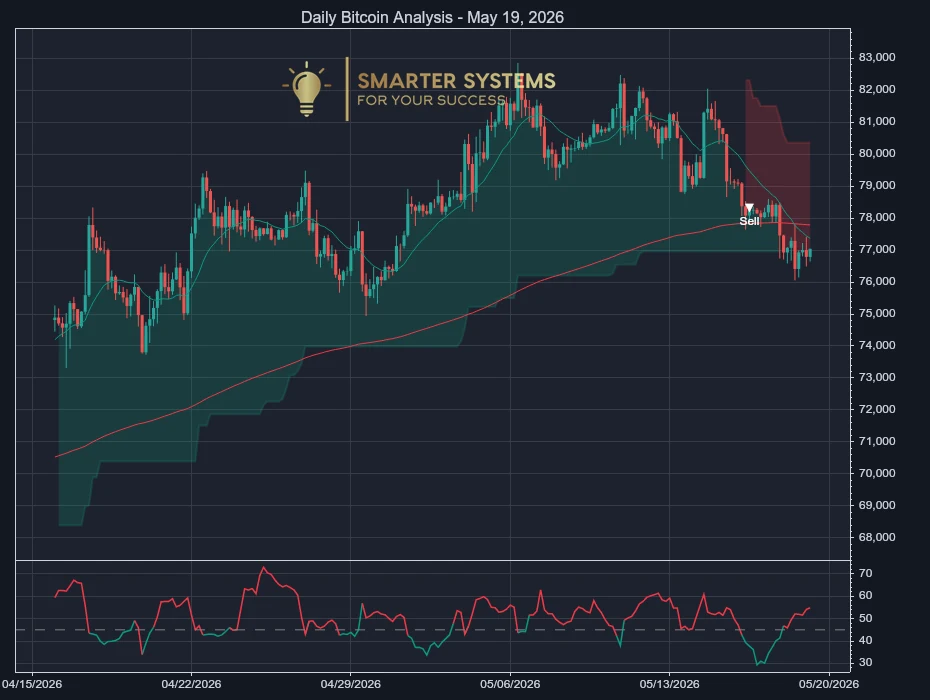
The current BTCUSDT read is defensive. Bitcoin closed the latest bar at 77,037.92, after recovering part of the earlier slide but failing to erase the pressure that built through the prior session. That matters because the strongest activity came when price was being forced lower, while the subsequent lift carried noticeably less participation. In plain terms, buyers have been able to interrupt the decline, but they have not yet made sellers uncomfortable. The cryptocurrency market often turns when a weaker close is rejected quickly and widely; this is not that picture. The last push up looked more like stabilisation than fresh demand, and resistance remains close enough above current trade to make chasing exposure a poor use of risk. The important behavioural clue is sequence. The market accepted lower prices first, then lifted without the same urgency. That sequence tells portfolio builders to distinguish between a tradable pause and a genuine improvement in demand.
Market structure is giving a cleaner message than the headline move. The previous downswing travelled through a wider high-low band and attracted the clearest trading volume of the sample, which means the selling was not hidden or incidental. The latest recovery moved through a much narrower band and volume fell sharply, so the bounce carries less authority. This is where price action becomes important: the market is choppy, but not randomly so. Each attempt to recover is being met before it can open distance from nearby resistance. Support is present because the lows have not been extended in a straight line, yet the support is reactive rather than dominant. Serious capital tends to show itself by absorbing pressure and then expanding participation on the rebound. So far, participation has contracted after the selloff, which keeps the burden on buyers. A healthier structure would usually show the opposite relationship: less effort on the decline, more effort on the repair, and a clearer push away from contested ground.
The confirmed down-trend should be read literally, but not dramatically. It says the balance of control is with sellers, not that Bitcoin must accelerate lower immediately. The choppy character means the path is uneven, with enough two-way trade to frustrate both late shorts and impatient buyers. That is often the point at which investors confuse hesitation with improvement. A Sell signal in this setting is not a forecast of collapse; it is a practical warning that the better decision may be to take profits, reduce exposure, or delay new allocation until the market proves that demand is stronger than supply. Momentum has not disappeared, but it is leaning against buyers because the better participation appeared on the downside. The system is flat and watching, which fits the tape: there is information in the weakness, but not enough quality in the rebound to justify forcing a position. For portfolio managers, that argues for patience rather than prediction. The issue is not whether BTC can bounce during the session; it is whether that bounce changes who is in control.
Current System Positioning
The system is Flat, status idle, and has been out of position for 17 bars. That keeps the read observational rather than committed while the Sell signal and confirmed down-trend remain in place.
What to Watch Next
The most useful marker now is how BTCUSDT behaves on the next push back into the last recovery area. A slow approach that stalls below the recent high, especially if trading volume does not expand, would keep sellers in control. A stronger read would require buyers to absorb supply before the prior intraday low is tested again, not merely lift price for a few quiet hours while momentum remains thin.
Frequently Asked Questions
The Sell signal points to caution rather than fresh aggression. With the system Flat and idle, the read favours reducing exposure, protecting gains, or waiting for stronger demand before committing new capital. The signal reflects seller control, not a guaranteed sharp decline.
The choppiness is not neutral because the stronger participation appeared on the downside, while the rebound carried lighter activity and a narrower trading span. That tells investors buyers are interrupting pressure, not yet taking control of the market structure.
Investors should monitor how price behaves near the last recovery area and whether buyers can absorb supply with expanding participation. A more constructive read would come from sustained demand before the prior intraday low is pressured again.
Lighter volume on the rebound suggests the recovery has less conviction than the preceding decline. For portfolio builders, that usually argues against adding exposure too quickly, because price can lift temporarily without showing that larger buyers are actively rebuilding positions.
// disclaimer This briefing is educational market commentary from a rule-based system. It is not financial advice and not a personal recommendation. Cryptocurrency is highly volatile, and past signals do not guarantee future results. Only invest money you can afford to lose. Read the full disclaimer.