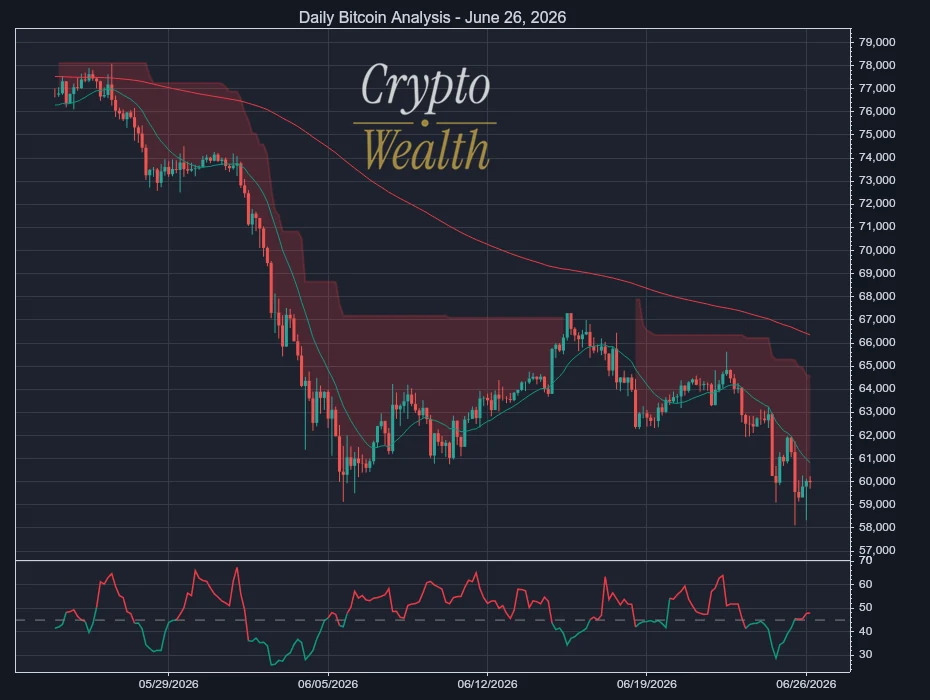
// previous briefing Bitcoin Analysis June 26, 2026: Sellers Control the Rebound
Bitcoin Market Read for June 27, 2026
If you are long Bitcoin, one thing matters more than price this morning. The latest push lost pace while participation thinned, which means sellers did not need heavy pressure to stop the rebound. That is the uncomfortable part of today's setup: BTC is not breaking down aggressively, but buyers are failing to turn a recovery attempt into control. In a confirmed down-trend, that kind of hesitation matters because capital often reduces exposure before the chart looks obviously weak.
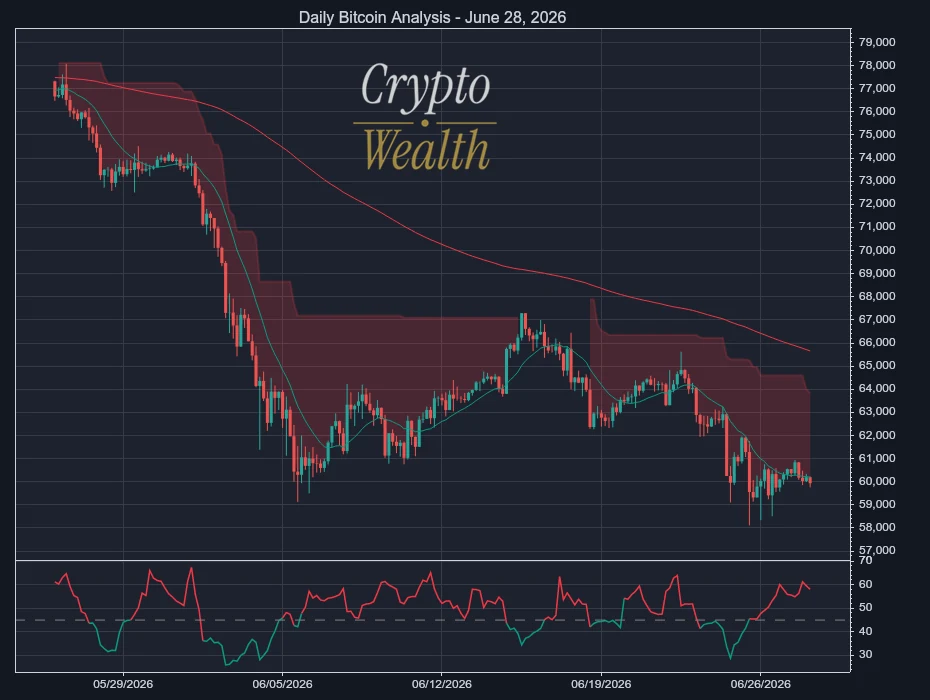
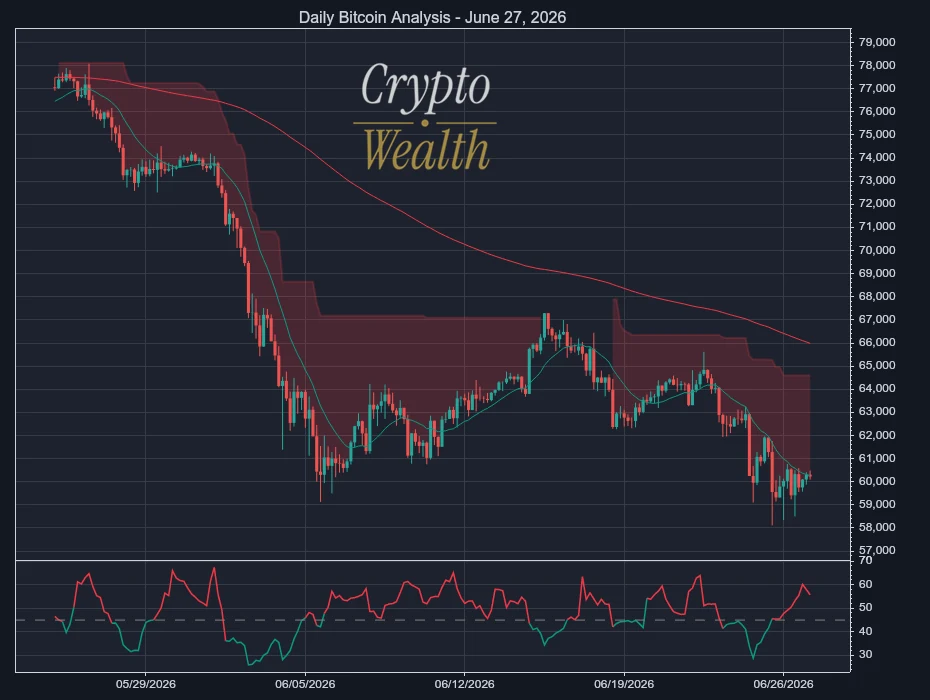
Bitcoin's current condition is defensive rather than dramatic. The last close at 60,223.28 leaves price near the upper half of the recent recovery attempt, but the market has not accepted higher trade with enough force to change the message. BTCUSDT pushed up, stalled below the prior rebound area, then slipped back without attracting an obvious fight from buyers. That is not panic selling. It is a quieter form of supply, where each attempt to extend is met by holders using strength to reduce risk. For investors, the distinction matters. A market can look stable on the surface while its internal pressure is still leaning lower. The Sell signal fits that reading because it does not require an immediate breakdown to be useful. It says the balance of evidence favours protecting gains, trimming tactical exposure, or waiting before adding fresh capital. The system being flat and watching reinforces that point: there is not enough quality in the rebound to justify pressing a long position, but there is also no need to chase weakness after price has already absorbed several failed pushes.
The structural context is the important part. The previous push lifted from a lower area and closed firm, but it did so after a wider burst of volatility and stronger participation earlier in the sequence. The latest bar narrowed that high-low spread and brought in noticeably lighter trading volume. When volatility contracts after a rebound, investors usually want to see buyers absorb supply calmly and keep price near the top of the move. Here, the opposite message is emerging. The pace cooled, participation faded, and the upper side of the recovery continued to act as resistance. Support has not disappeared, because sellers have not forced a clean break of the latest defended area. Still, support that survives only because activity dries up is different from support that attracts committed demand. That distinction is central to today's market structure. The sequence of repeated stalls below the same upper area also tells us sellers are organised enough to meet strength, even when they are not pressing the downside with size. Across the cryptocurrency market, BTC still looks like the asset setting the tone, but its price action is not inviting broad risk-taking. Capital appears selective rather than aggressive, and selective capital tends to wait for cleaner evidence before expanding exposure.
The confirmed down-trend should be read through behaviour, not through the label. Bitcoin has been unable to turn rebounds into sustained control, and each recovery attempt is losing some of the urgency that buyers need. Choppiness makes that harder to trade because price is not travelling lower in a clean line. It hesitates, rebounds, and then gives back enough ground to keep momentum from rebuilding. That is exactly where investors often make poor decisions: the market feels less dangerous because the decline is not fast, yet the ownership quality is weakening because rallies keep attracting supply. The Sell signal is therefore best understood as a risk-management signal, not a forecast of immediate collapse. It favours taking profits where portfolios are overweight, reducing leverage where exposure is tactical, and demanding better evidence before increasing BTC allocation. For long-term holders, the message is not to abandon the asset. It is to recognise that the current phase rewards patience more than prediction. A stronger read would require price to reclaim the rejected area with broader participation, not just drift higher on thinner activity.
Current System Positioning
The system is Flat, status idle, and has been out of position for 251 bars. That keeps the read observational rather than committed while the Sell setup develops, with no active long or short exposure.
What to Watch Next
Today’s marker is the next pullback into the latest defended area. The cautious read remains intact while buyers wait too long, let price press into recent support, and fail to bring firmer participation. A more constructive shift would show earlier bids appearing before that area is tested, with trading volume expanding on the response rather than on the slide. The location of demand matters more than another brief push near resistance.
Frequently Asked Questions
Today's Sell signal reads as a risk-management prompt. It favours taking profits, reducing tactical exposure, or holding back on new allocations while the confirmed down-trend and choppy price action keep buyers from taking control.
The concern is not disorderly selling. It is the repeated failure to convert rebounds into control. Choppiness can make weakness look less serious, but in this setup sellers are still meeting strength and momentum is not rebuilding.
Reassess if the next pullback attracts earlier demand, holds recent support without drifting, and brings firmer participation on the response. That would show buyers are acting before stress appears, rather than waiting for sellers to exhaust themselves.
Lighter trading volume after a rebound makes the advance less convincing. It suggests capital is selective and buyers are not yet committing broadly. In BTCUSDT, that keeps resistance important and makes a patient stance more credible than chasing the bounce.
// disclaimer This briefing is educational market commentary from a rule-based system. It is not financial advice and not a personal recommendation. Cryptocurrency is highly volatile, and past signals do not guarantee future results. Only invest money you can afford to lose. Read the full disclaimer.